
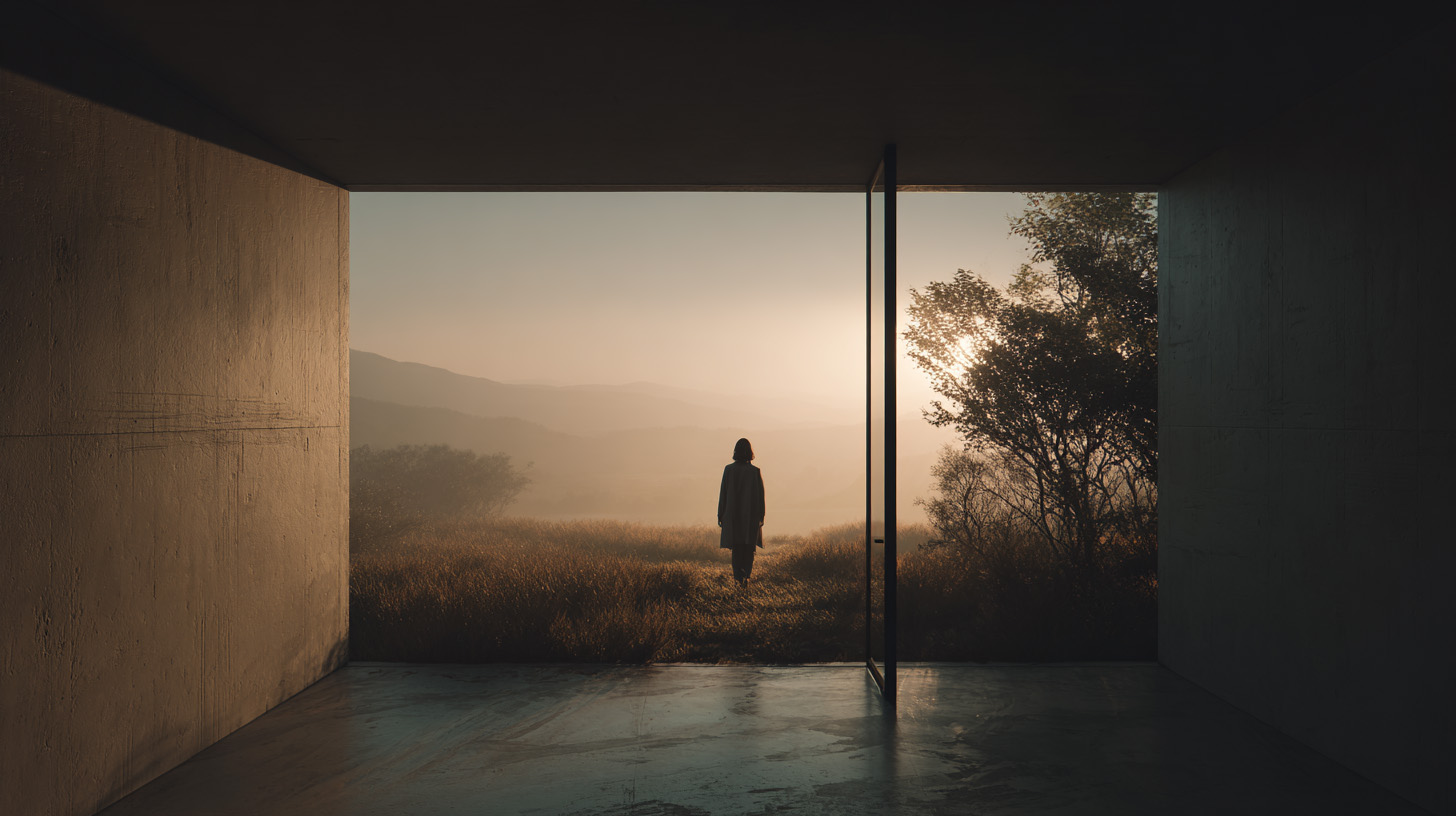


Some gardens you admire. Others you want to be in.
The distinction seems small. It isn’t.
A garden you admire has something to look at — strong lines, considered planting, materials that sit well together. It photographs well. In a certain light, at a certain moment, it is genuinely beautiful. But standing in it, something is slightly off. You don’t quite want to sit down. You move through it without staying. You take in the view and then, without deciding to, go back inside.
A garden you want to be in is different. It may not announce itself as dramatically. But something about it holds you. The proportions feel right. The spaces invite rather than display. You find yourself staying longer than you intended, noticing things you hadn’t seen at first glance.
Both gardens may have cost the same. Both may have been carefully made. The difference is not execution. It is balance.
The gardens that endure — that feel right year after year, that age with grace rather than dating — are the ones where three things are held in equal tension from the beginning: form, function, and feeling.
Form is the bones. The levels, the edges, the relationship between spaces, the geometry that gives a garden its structure whether planted or bare. It is what remains when the planting dies back in winter and the space has to hold itself through shape alone.
Function is the logic. How the garden is actually used — where people naturally gather, how they move through it, where the light falls at the time of day it matters most. A garden that works against the natural patterns of use will be quietly resented, however beautiful it appears.
Feeling is the hardest to name and the easiest to sense. The atmosphere a space holds — whether it offers enclosure or exposure, calm or restlessness, connection to the wider landscape or retreat from it. The thing that makes someone want to stay.
When all three are present, the result operates beyond its individual elements. It doesn’t need explanation or a particular season or the right light. It simply works, in the way a space works when it has been designed for the full experience of being in it rather than the partial experience of looking at it.
When one is absent, you feel it — even if you can’t immediately name what’s wrong.
Form without feeling produces gardens that are impressive and cold. Function without form produces spaces that work and look unresolved. Feeling without function produces somewhere atmospheric that nobody actually uses.
Most gardens that disappoint don’t do so because of poor materials or weak planting. They disappoint because one of these three was treated as secondary — resolved as an afterthought, or not considered at all.
The timeless ones hold all three. From the very first decision.