

Stand in the kitchen of a well-built house and look out toward the garden.
In most homes, what you see is this: a patio. A stretch of lawn or gravel. Planting arranged along the edges. A fence marking where the property ends. It is tidy. Finished. And it has almost no relationship with the house behind you.
The window that looks onto it was positioned for light, not for view. The door opens onto a step that was resolved on site, not designed. The material underfoot changes the moment you cross the threshold — the same property, suddenly a different place. The space beyond offers no sense of arrival, no reason to stay. You step out, look around, and come back in.
This is not a badly made garden. This is a garden that was made last.
Now stand in a different kitchen. Same brief, similar budget. But this time, the conversation that shaped the house included the space outside it.
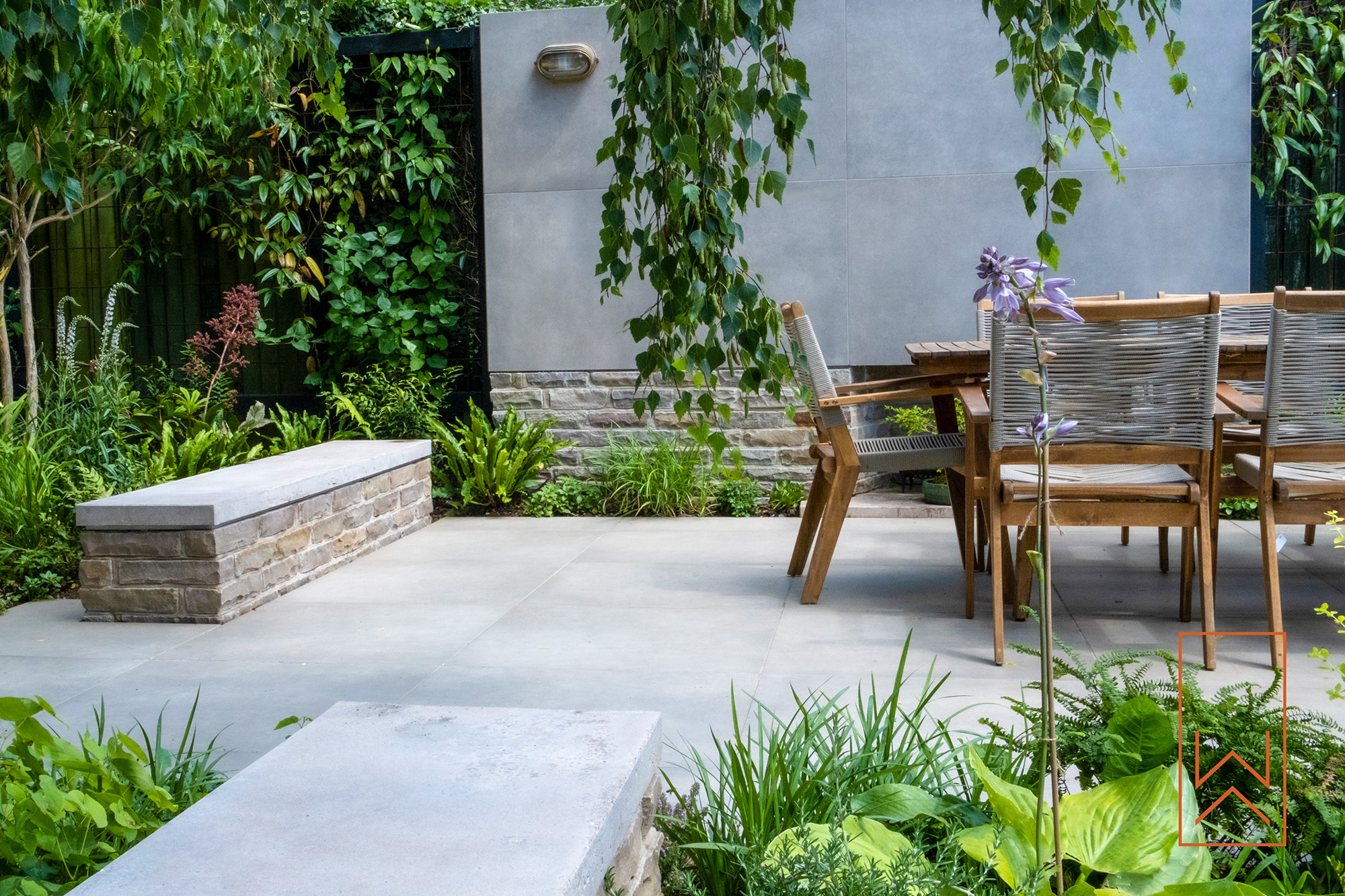
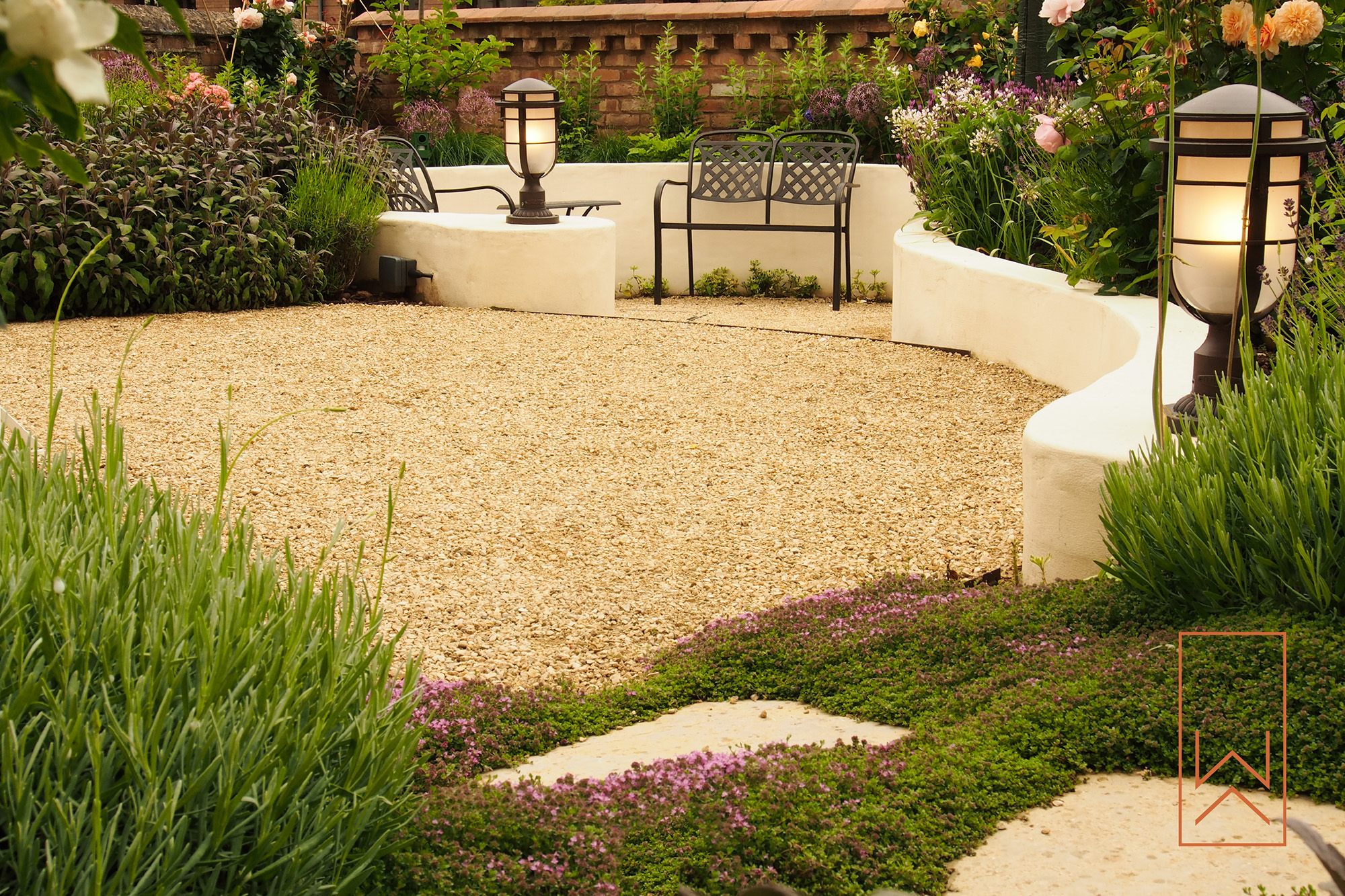
The window frames something worth looking at. The door opens level — threshold to terrace — as if the architect drew both in the same breath. The material carries through: not matching exactly, but speaking the same language. The level change beyond the terrace is gradual, deliberate, drawing you down and outward rather than stopping you at the edge.
You step out and keep walking. Something about the proportion, the enclosure, the way the planting creates a sense of edge without closing you in. You find yourself standing still without having decided to. Then sitting. Then noticing that the light has changed and more time has passed than you expected.
You don’t think about going back inside.
The difference between those two experiences is not budget. It is not the quality of the contractor or the choice of materials. It is sequence.
The first garden was designed after the house was finished. The second was considered at the same time — by the same people, in the same room, from the beginning.
When a garden designer is part of a project from the outset, the questions change. Not ‘what shall we do with the outdoor space?’ but ‘how does this building want to meet the land it sits on?’ Not ‘where should the terrace go?’ but ‘where do people naturally want to be — at different times of day, across different seasons, at different stages of a life?’
These are not garden questions. They are spatial questions — the same questions the architect is asking inside the building. When both disciplines ask them together, from the same starting point, what results is a home that doesn’t end at the back door.
Inside to outside. Morning to evening. The house and garden feel like one considered thing, not two separate projects that happen to share a boundary. You move through without the experience breaking. Something in you settles. You feel no need to be anywhere other than where you are.
That quality is only ever the result of decisions made together. Early. Before the possibilities close.
The conversation needs to start at the beginning.
twgd.co.uk · Tom Wolstenholme Garden Design