

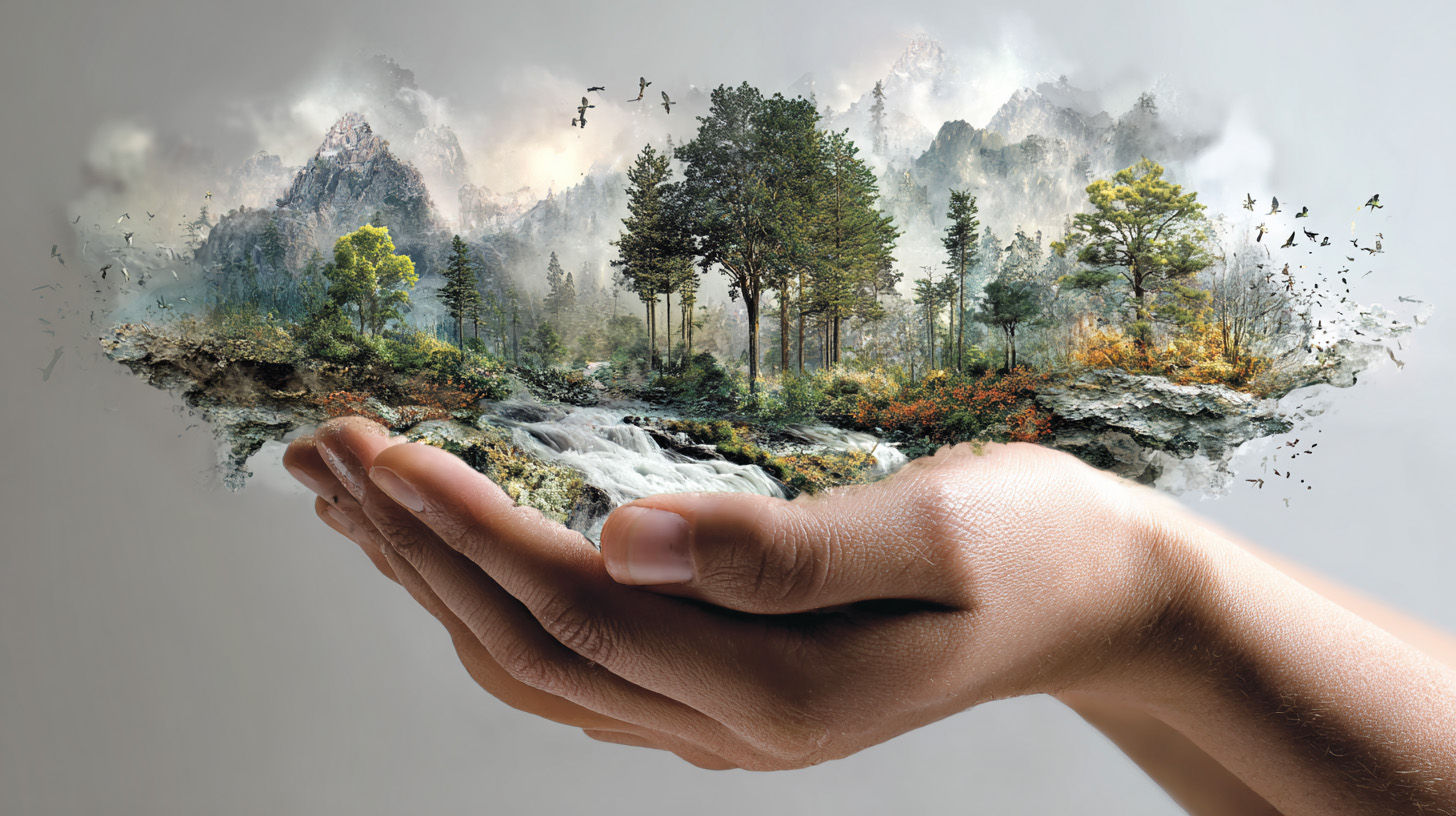
We are not separate from the natural world. We are made of it.
The same forces that shaped a river valley shaped us. The same chemistry that drives a root through soil drives the beating of a heart. We evolved over millions of years in direct, constant contact with the living world — its rhythms, its textures, its light, its slow and unrelenting movement. That world is still inside us. We still resonate with it, whether or not we are conscious of doing so.
Most of us now inhabit environments that have no relationship with it whatsoever.
We live in controlled, static, manufactured spaces. The light is artificial. The temperature is fixed. The surfaces don’t move or change or respond to the season. We are surrounded by things we have made — and increasingly little that exists independently of us. This is the condition of modern life. And it carries a cost that is real even when it is difficult to name.
Most people feel it. A restlessness that comfort doesn’t resolve. A need for stimulation that more stimulation doesn’t satisfy. A quiet, persistent sense that something is missing — not dramatically, but in the way an absence makes itself known over time. We reach for the walk in the countryside, the weekend away, the houseplant on the windowsill. But these are visits. We return to the same environment and the same disconnection.
A garden is different. Not because it is more dramatic than a walk in the hills — it isn’t. But because it is there. On the other side of the door. Available not as an event but as a daily reality. A piece of the living world woven into the fabric of an ordinary life.
When a garden is designed with genuine intention — not decorated, not simply landscaped, but designed — it becomes something rare: an environment that is fundamentally alive. That moves with the light. That changes through the seasons in ways that ask nothing of you except to be present within them. Wind in the planting. The shift of shadow across a wall. The return, each year, of something you planted and then half-forgot. A quality of stillness, not because nothing is happening, but because everything that is happening belongs there.
People who spend time in spaces like this describe the same thing, in different words. That they didn’t want to leave. That they felt more at ease than they had in a long time. That something in them settled. This is not mystical. It is what happens when a person is in an environment that reflects what they actually are — part of the natural world, connected to its rhythms, held by something that exists beyond their own making.
A garden designed with this intention is one of the few places available to most people where that connection can be quietly, practically restored. Not as a retreat from life — as part of it. A daily anchor. Somewhere the senses that the built world suppresses begin, without announcement, to work again.
The implications reach further than the personal. People who feel genuinely connected to the natural world tend to relate to it differently — beyond the boundary, beyond the garden, in the wider choices they make. That shift doesn’t come from instruction or guilt. It comes from direct experience of something worth caring about. A garden, at its best, is where that experience begins.
This is why the decisions made before anything is built matter more than most people realise. A space that is merely attractive gives you something to look at. A space designed with genuine intention gives you something to be part of.
The difference between those two outcomes is almost entirely determined by what happens at the very beginning.
“If you have a garden and a feeling it could be more than it is — that’s enough. I’d like to hear about it.”