

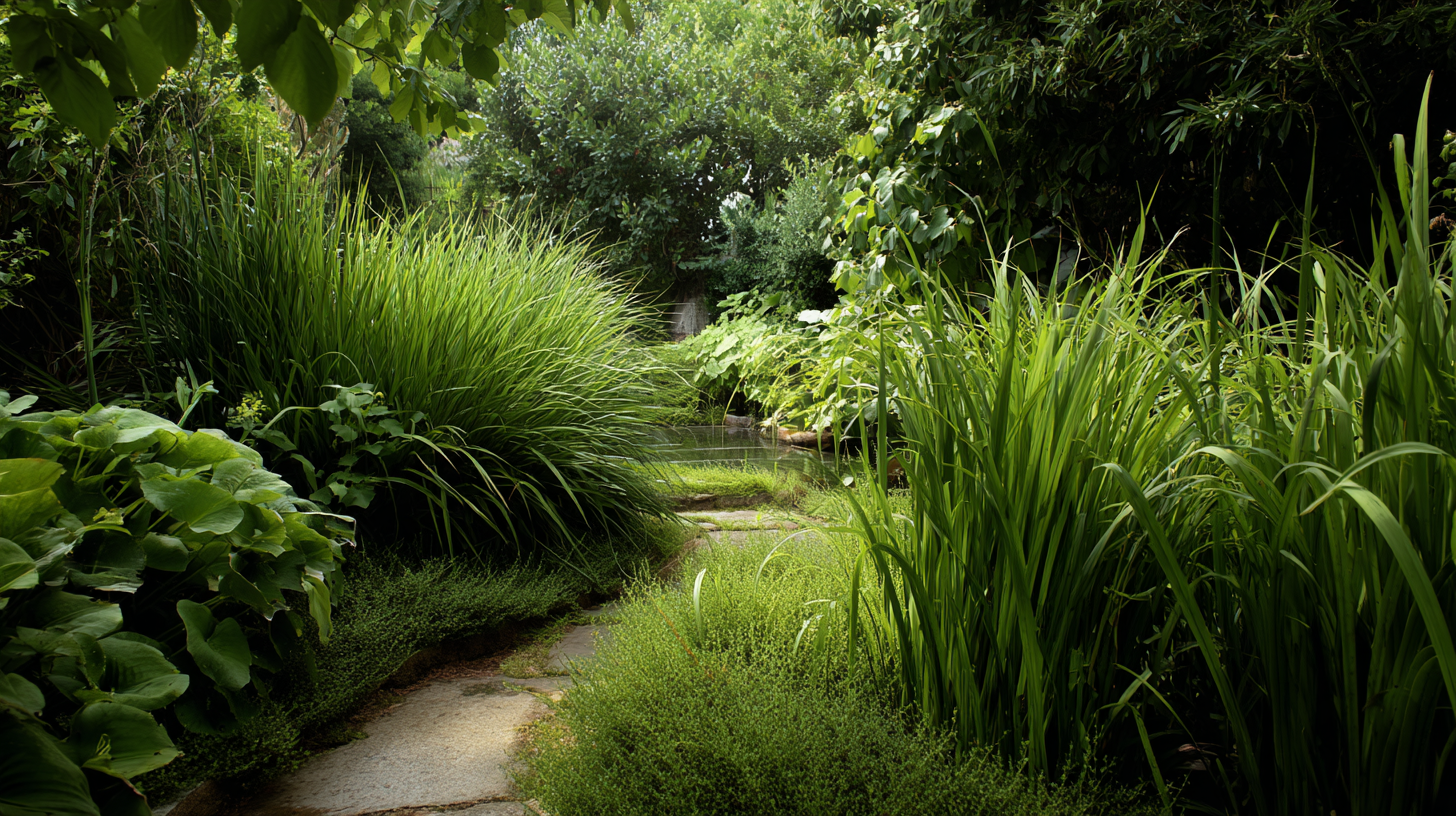
There is a kind of tiredness that doesn’t respond to rest. The kind that comes from too much noise, too much decision, too much time in spaces that make demands without offering anything back. Most indoor environments — however well designed — are asking something of you. The garden is the only space in most people’s lives that isn’t.
Or it should be. Whether a garden actually delivers that depends entirely on whether it was designed to.
A garden that settles you is not the result of pleasant planting. It is the result of spatial decisions that the nervous system reads before the mind does.
The spatial decisions that produce this begin with movement. The way a path curves where it could cut straight. The width of a threshold that signals a transition between uses without announcing it. The relationship between open space and enclosure — how a garden opens out, then draws in, then opens again. These are not aesthetic choices. They are the spatial grammar through which a garden guides the body and, with it, the mind.
When flow is designed well, movement through the garden feels unhurried and natural. You arrive at places without having decided to. You slow down without consciously choosing to. The garden is doing something to you that you haven’t registered as design — and that is exactly right. The moment a garden feels designed it has failed at this particular task. The best spatial decisions are the ones you never notice.
Quiet is different from silence. A garden can be surrounded by noise and still feel still — if it has been designed with enough enclosure, enough sensory material, enough layering of soft sound to mask what comes from outside. Grasses that move in the wind. A canopy that filters rather than blocks. Planting dense enough to absorb ambient noise without feeling claustrophobic.
Designing for quiet means thinking about containment as a positive quality — not enclosure for privacy alone but for the physical sense of being held. A seat positioned in a slight recess feels different from one in the open, even if the view is identical. The body registers enclosure as safety, and safety as the permission to release what it has been holding. That is not a small thing. It is, for many people, the thing the garden is for.
Gardens also mark time in a way that almost nothing else in contemporary life does. The sequence of the seasons — emergence, abundance, withdrawal, bare structure — is not decorative. It is a rhythm that connects people to cycles larger than their own concerns, and that connection has a quality that is genuinely restorative in a way that designed beauty alone cannot achieve.
A garden that holds interest across all twelve months — that has something worth observing in February as well as in June — does this. Not through constant spectacle but through genuine seasonal character. The particular quality of winter light on bare stems. The first emergence of growth in early spring before anything has been decided yet. These are experiences that require a garden designed for them, not one designed for its peak and managed against its off-season.
The gardens people are most grateful for, years after they were made, are not the ones that looked best in photographs. They are the ones that kept working — that had something to offer in February as well as July, that aged in ways the design had anticipated rather than resisted.