


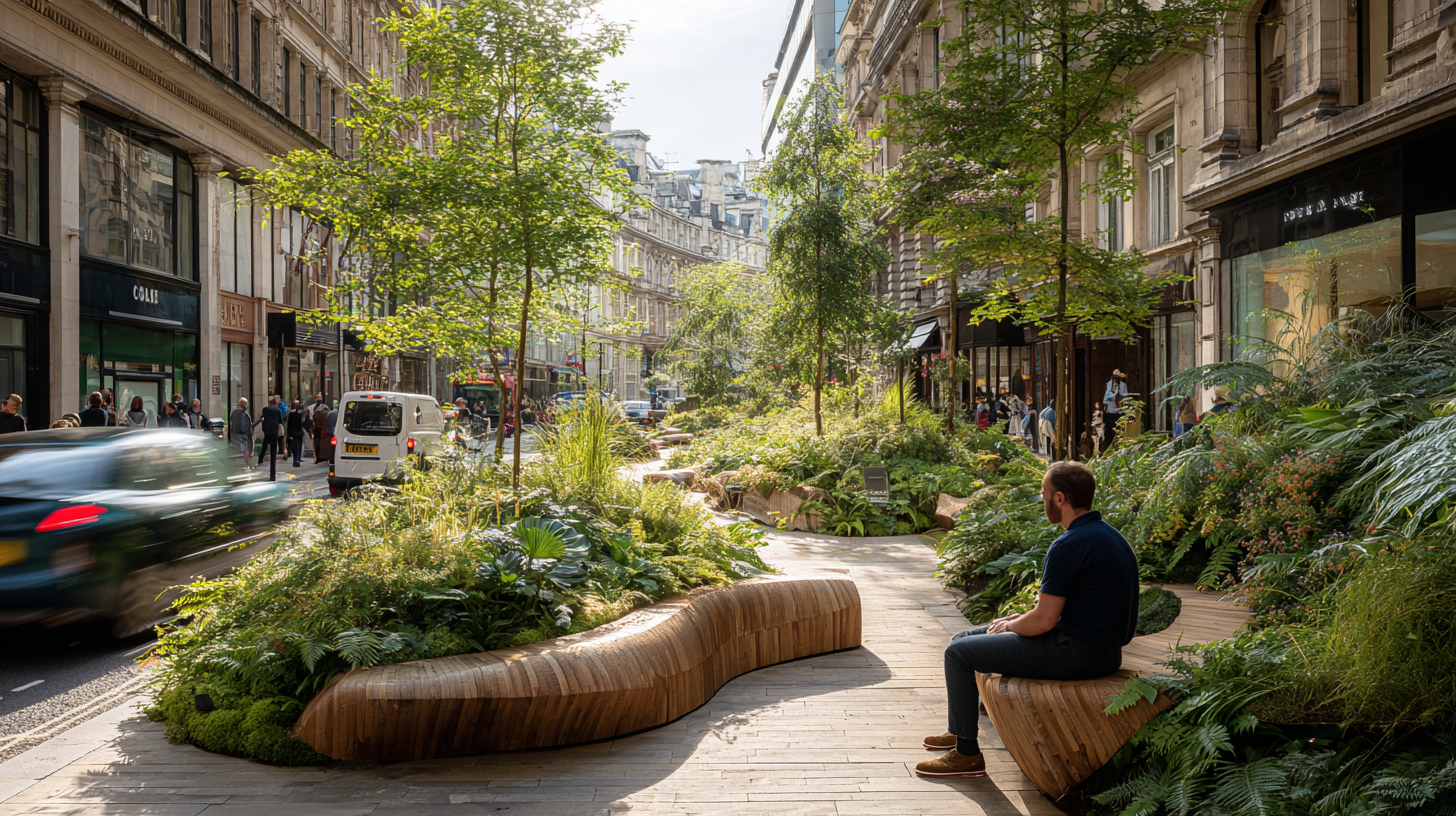
You have not decided to make this a habit. It simply became one. The same chair at the same hour. A few minutes at the same end of the terrace before anything else begins. The place the cup goes down while the light is still low.
You would not call this a ritual. But repeat it for a season and something shifts — in how the day starts and, with it, how the rest of it goes. The space has begun to hold something that wasn’t planned into it. Or rather: the conditions were designed, and the ritual formed around them.
This is what a garden can do that a room cannot. Not through instruction or intention, but through the particular quality of a place that receives you the same way each time you return to it.
A garden that supports ritual doesn’t prescribe it. It creates the conditions — the positions, the thresholds, the quality of light at the right hour — in which ritual becomes possible on its own.
There is a useful distinction between a routine and a ritual. A routine is automatic — the alarm, the kettle, the phone. It moves you through the day without asking anything of you. A ritual is carried out with awareness. It marks a transition. It returns you to yourself, briefly, before the day’s requirements begin.
The garden is one of the few spaces in contemporary life that can support the second without demanding the first. It does not require attention. You can be in it and notice things — the light, the sound, the weight of the air — without those things requiring a response. That quality is rarer than it sounds, and it is one of the things a garden can be deliberately designed to hold.
Designing for it means understanding how people move when they are not directed. Where they pause. What draws them back. The placement of a seat, the line of a path, the position of something worth stopping at — these are not merely aesthetic choices. They are the spatial conditions from which habit forms.
The rituals that become personally significant are almost always quiet. The morning walk that closes the same loop. A few minutes at the edge of the planting before dinner. The pause at the terrace before going in. None of these are programmes. But the conditions that made them possible were designed.
A garden that holds this quality places seating where the light is right at the hour the household is most likely to be outside — not where the view is most photogenic. It makes paths that loop and return, giving structure to movement without prescribing it. It holds moments between spaces: small thresholds that invite a change of pace without announcing one.
These are easy things to omit. They produce no single striking feature. But they are what accumulates, over years, into a garden that is genuinely used rather than merely maintained — and that becomes indispensable in ways the household cannot quite articulate.
Most gardens are designed for how they will look when they are finished. The ones people return to with the most gratitude, long after the opening season has passed, are the ones that kept offering something. Each morning. Each season. Each return.
A garden that holds that quality was designed for the life lived in it, not the life imagined for it.