

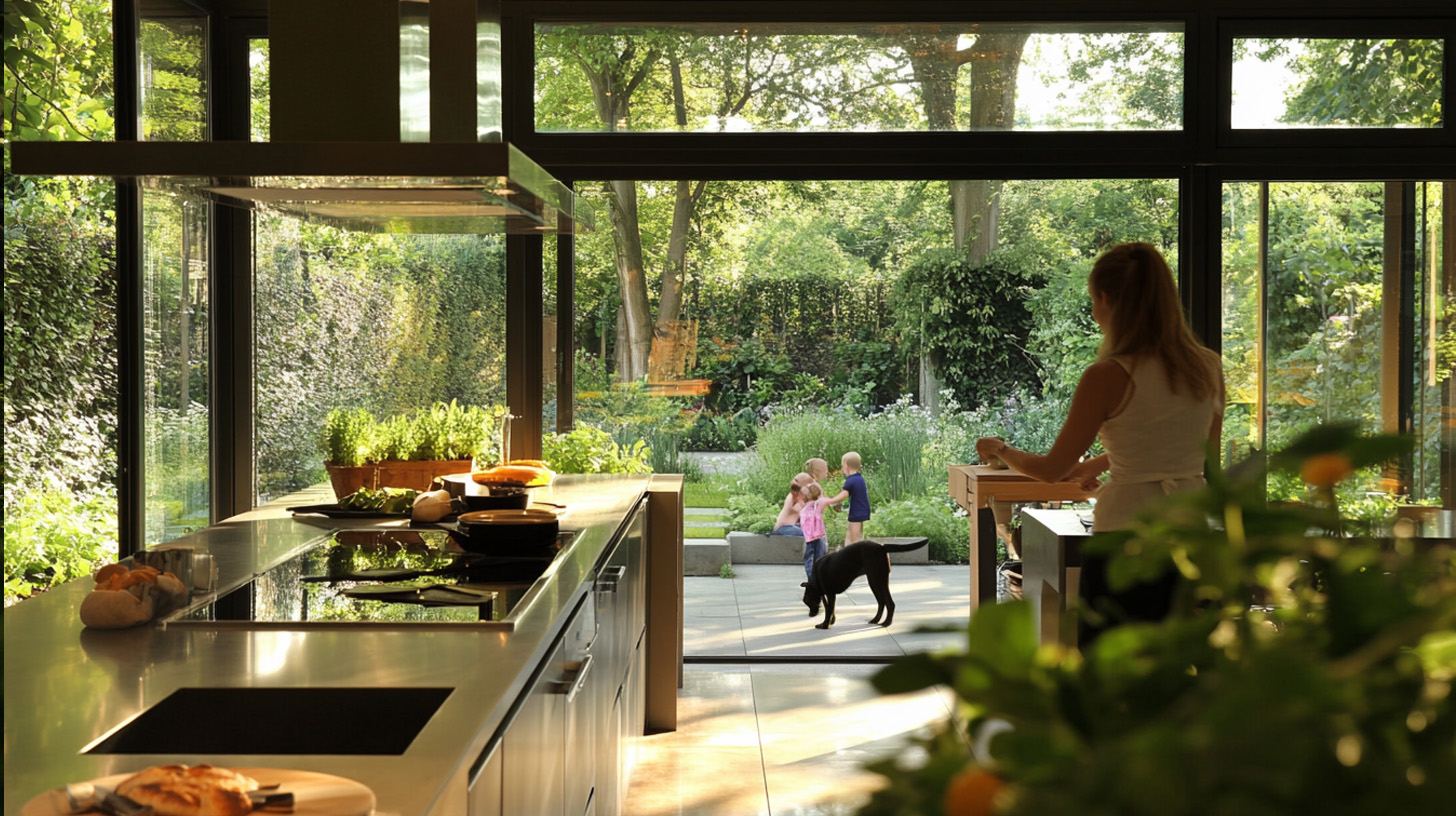

Explore how thoughtful garden design can adapt as your life unfolds — supporting change, resilience, and beauty that deepens over time.
We often think of gardens as fixed — like a snapshot in time. Designed, built, finished. But life doesn’t work like that. Life shifts. It stretches and contracts. Families grow and shrink. Needs change. Priorities evolve. The spaces we live in — and around — should be designed with that truth in mind.
This is especially true in the garden, where the passage of time isn’t just visible — it’s integral. Seasons turn. Plants mature. Children grow taller. Our use of the space subtly shifts, often without us even noticing. And that’s why garden design shouldn’t aim to capture a moment. It should aim to support a lifetime of moments.
More Than a Space — A Living Companion
A well-designed garden isn’t a static object. It’s not a fixed exhibit — it’s something designed to live and change. It’s a living, responsive environment that mirrors the way we live.
In the early years of family life, it might offer soft, open lawns where young children can play, fall, explore. As they grow, perhaps those same spaces evolve into more structured zones — areas for gathering, socialising, retreating. And as the household changes again — perhaps children leave home, or a career slows — the garden shifts once more, offering space for restoration, reflection, or quiet productivity.
We’ve worked with clients who initially asked for a simple outdoor dining space. But as conversations unfolded, it became clear that what they truly needed was flexibility — space for their toddlers to explore safely, room for friends to gather spontaneously, and later, the opportunity to grow food or enjoy solitude. The final design didn’t settle on one idea — it held space for all of them, layered gently so that nothing felt over-defined.
Another client came to us with a very clear vision: a lawn for football, a pergola for entertaining, and low-maintenance borders. But as we listened, we uncovered more: a parent with sensory needs, elderly relatives who would visit for long afternoons, a teenage daughter beginning to host friends. The finished garden offered everything they asked for — and more. Hidden seating tucked away for solitude. Gentle pathways for older guests. Textural planting that could be touched, not just seen. It wasn’t just a family garden. It was a family-supporting garden.
This is the difference between decoration and design. True design anticipates change. It creates room for life to unfold.
Designing for Adaptability: Why It Matters
Too often, outdoor spaces are designed like products. Final. Finished. “Low-maintenance” becomes code for “locked-in.” But gardens, by their nature, are not finished. They grow, shift, and respond — not just to the climate, but to the people who inhabit them.
Adaptability is not just a nice-to-have. It’s a form of resilience.
It prevents waste.
It extends the garden’s relevance.
It respects that life isn’t linear.
When we over-prescribe a space, we limit its usefulness. When we under-design it, we lose the opportunity to anchor and support meaningful change. But when we intentionally design for evolution, we create something powerful: a garden that lives with you.
Imagine:
A small corner deck that starts as a play zone but later becomes a morning yoga platform.
A planting scheme that feels full in year one, yet evolves into a rich, layered system that supports pollinators and offers privacy over time.
Modular seating and lighting that shifts as the family dynamic does.
These aren’t gimmicks. They’re thoughtful decisions that respect both the nowness and nextness of life.
The Seasons Within Us
We are not separate from the seasons. Our energy, needs, and rhythms mirror the natural cycles around us. A garden that evolves with your life also aligns with these seasonal moods:
Spring: Renewal, energy, growth — ideal for experimentation and play.
Summer: Activity, gathering, outwardness — places to connect and entertain.
Autumn: Reflection, slowing down — quiet corners and sensory richness.
Winter: Stillness, rest — protected views, evergreens, structure.
A space that shifts with you emotionally doesn’t just meet functional needs — it nourishes you. It acknowledges the inner world as much as the outer one. And over time, it becomes a place of grounding, even as life changes.
Future-Proofing Without Losing Soul
One of the fears people have when designing a long-term garden is that they’ll lose spontaneity — that it’ll feel clinical or overly planned. But future-proofing isn’t about predicting every detail. It’s about building capacity — for things to emerge.
That might mean:
Infrastructure beneath the surface that allows for new lighting later.
Multi-use zones that can serve different purposes depending on need.
Material choices that age gracefully and don’t tie the space to a single aesthetic moment.
For example, we often install conduit routes during the early phase of a build — even if the client doesn’t have a lighting plan in place yet. It costs very little at that stage, but gives them the freedom to adapt the mood and usability of the garden later on. Similarly, using reclaimed brick or weathering steel allows the garden to gain richness over time, rather than appearing dated.
The best gardens don’t resist time — they work with it. Materials soften. Trees mature. Paths shift underfoot. And as that happens, the space gains character, not chaos.
Designing with foresight allows for beauty that deepens rather than fades.
Letting Go of the “Finished” Mindset
Many clients ask, “How long will it take until the garden is finished?” But a better question might be, “How soon will the garden begin to feel like ours?”
A garden isn’t something to complete. It’s something to support the way your life unfolds. And good design makes that beginning feel rich and meaningful — not because everything’s already there, but because the foundation is strong.
We’re not designing still life. We’re designing systems. Places that breathe with you. That offer something in every chapter of your life, not just the one you’re in now.
An Invitation to See Your Garden Differently
This is what makes garden design such a powerful, long-term investment. It’s not about how the space looks on install day — it’s about how it feels, supports, and evolves across the story of your life.
So whether you’re building your forever home, downsizing, or simply upgrading a current garden — consider this:
Are you designing just for now?
Or are you designing for the lives still to be lived?
The most meaningful gardens are those that don’t just reflect who you are — but who you might become.
And that’s what makes a garden timeless.