

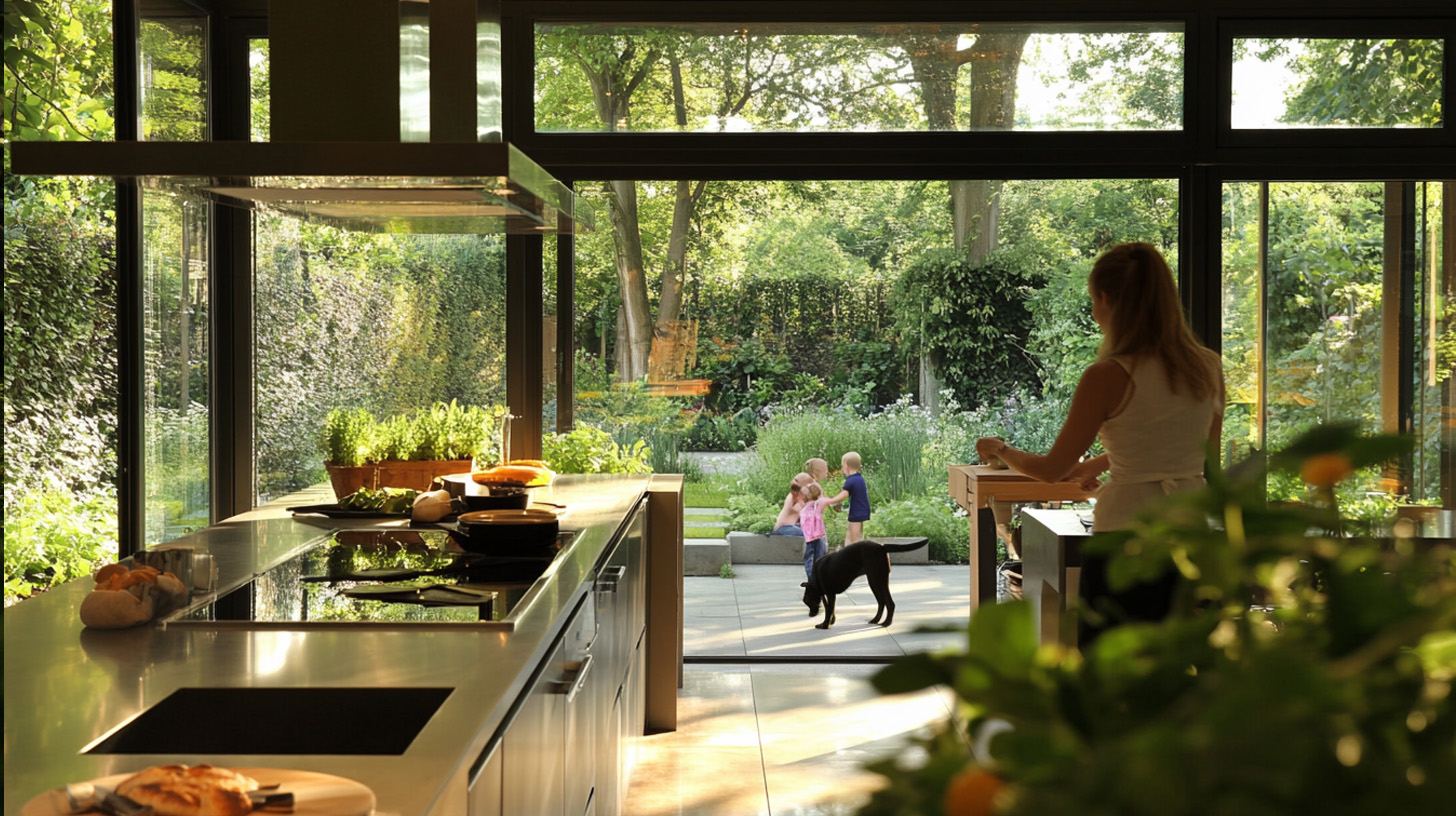

There is a particular kind of disappointment in a garden that no longer fits.
Not because it was poorly made. Often because it was made thoughtfully — for a specific moment in a life that has since moved on. The swing set still stands, years after anyone used it. The vegetable beds that were tended every weekend now sit empty. The terrace designed for gatherings holds two chairs where it once held twenty people comfortably.
The garden hasn’t changed. The life has.
This is one of the least discussed problems in garden design. Not that spaces are poorly made — but that they are made for a version of a life rather than for a life itself. A snapshot rather than a story.
The distinction matters because gardens move slowly. A decision made today — where the levels sit, how the spaces relate to each other, what the bones of the structure are — will still be present in fifteen years. The children who needed space to run will have left home. The couple who wanted to entertain will have found they prefer stillness. The person who had energy for a large vegetable garden will be looking for ease.
A garden designed only for today is already behind.
What a longer view asks for is different. Not the features of a life — the play area, the cutting garden, the outdoor kitchen — but the structure of it. Levels that create sequence regardless of how the space is used. Materials that age with dignity rather than dating. Bones that hold the garden when the planting changes around them. A spatial quality that works at thirty and at sixty, with children and without them, in the season of abundance and the season of quiet.
Features can be added, moved, replaced. Structure cannot — or not without a cost and disruption that far exceeds what careful thinking at the outset would have required.
The gardens that serve people best across time are the ones designed with a kind of temporal generosity. They don’t try to solve the present. They try to hold the future. Made with the understanding that the person who will live with this garden in twenty years is not quite the same person standing in front of me now — and that the design needs to serve both, and everyone in between.
That requires a harder conversation at the start of a project. One that goes past what a client currently wants and toward what they’ll eventually need. Most people haven’t been asked those questions. Most designers don’t ask them.
But the gardens that result from that conversation are ones that don’t disappoint with time. They grow alongside a life rather than falling behind it.