

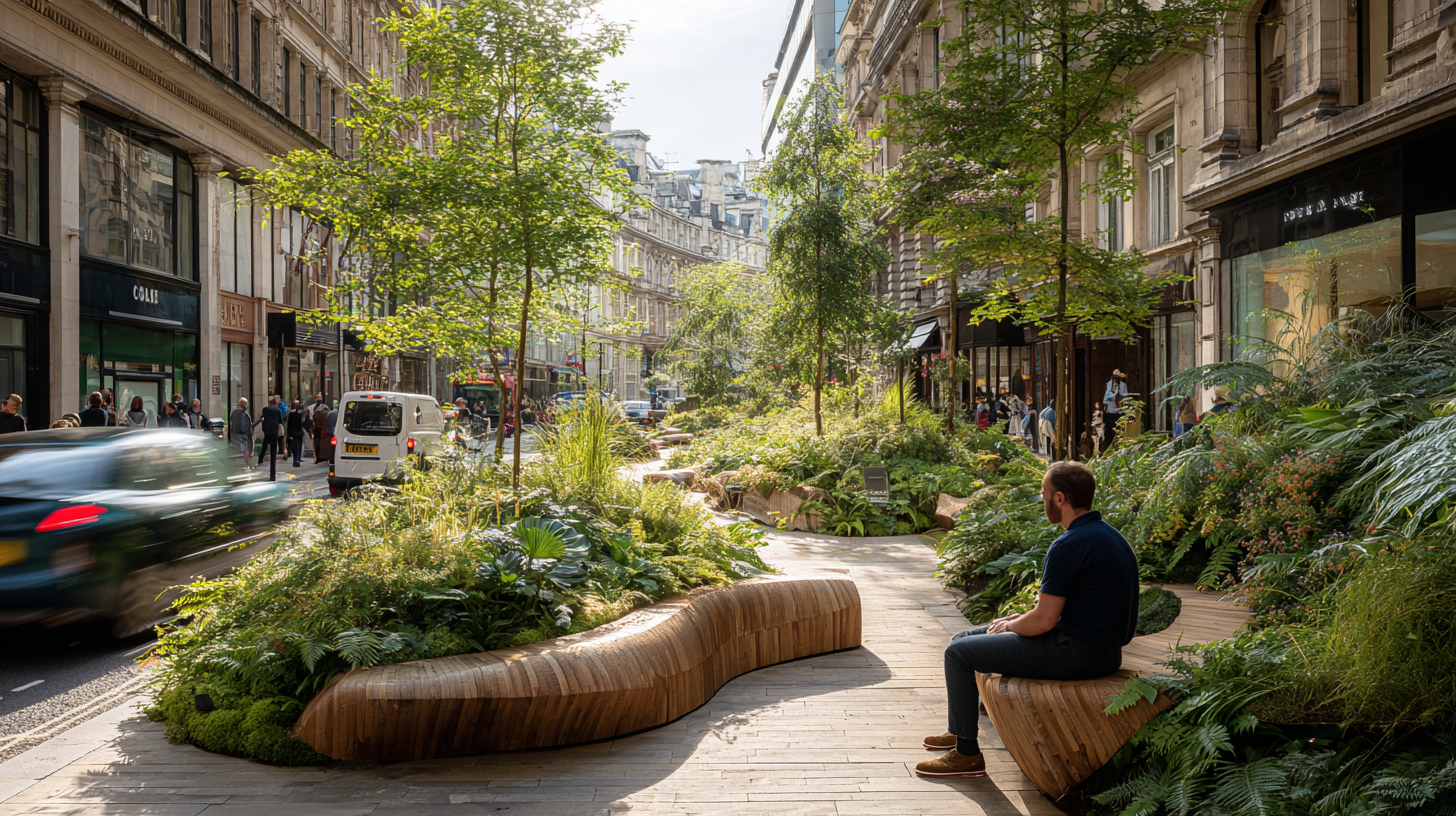
A garden can be full of plants and still be ecologically empty. Beds maintained against the natural tendency of the soil to host something more complex. Planting held just short of the condition in which it would begin to sustain itself — continuously managed, seasonally replaced, never quite allowed to find its own equilibrium.
This is most garden planting. Beautiful, often. Carefully chosen, frequently. But dependent on constant external input rather than developing internal logic. A performance of ecology rather than an example of it.
The alternative is not wilderness. It is design that begins from a different question: not what should this look like, but what conditions can this garden create — for the soil beneath it, for the insects that depend on it, for the larger systems it is connected to.
You are not inviting nature in as a guest. You are creating the conditions for it to return to somewhere it was always meant to be.
Every planting scheme succeeds or fails on one largely invisible factor: the soil beneath it. Healthy soil is alive — threaded with microorganisms, fungi, and root systems that form a web of interactions the surface planting depends on. When this web is intact, plants establish more readily, hold through drought more reliably, and sustain themselves with less external input. When it is disrupted — by compaction, by chemical application, by unnecessary disturbance — everything above it becomes dependent on intervention to compensate.
Designing with soil in mind means minimising disturbance, working with natural drainage and microclimate, and preserving the mycorrhizal relationships through which plants communicate and share resources below ground. The soil is not something to plant into. It is something to design with — a living substrate that grows richer over time if it is respected, and that does most of the hard work if it is allowed to.
Planting designed for systems rather than snapshots is structured differently from most planting schemes. Canopy, understory, and groundcover — layers that mirror natural plant communities rather than impose uniformity. Plants genuinely suited to the soil, the light, and the microclimate of the specific site. Succession built in, so that early-stage planting evolves into long-term structure rather than requiring periodic replacement.
A garden designed this way builds momentum over time. It holds its own. It becomes more interesting as it matures — more layered, more inhabited, more alive. The relationship between the garden and the people who tend it shifts. Less management, more observation. Less intervention, more attention. And in return, the garden gives more than is put into it.
A single garden, however well designed, is a node in something larger. Pollinator corridors run through neighbourhoods. Soil health connects across streets. The water a garden holds in heavy rain is the water that doesn’t overwhelm a drain further down the road. When enough gardens are designed with ecological intelligence embedded from the start, the cumulative effect is significant — not as policy, but as a quiet, distributed act of repair built one site at a time.
The most meaningful legacy a garden can leave is not its appearance on the day it is finished. It is the conditions it creates for life to continue — beyond the season, beyond the brief, and beyond the boundary.