

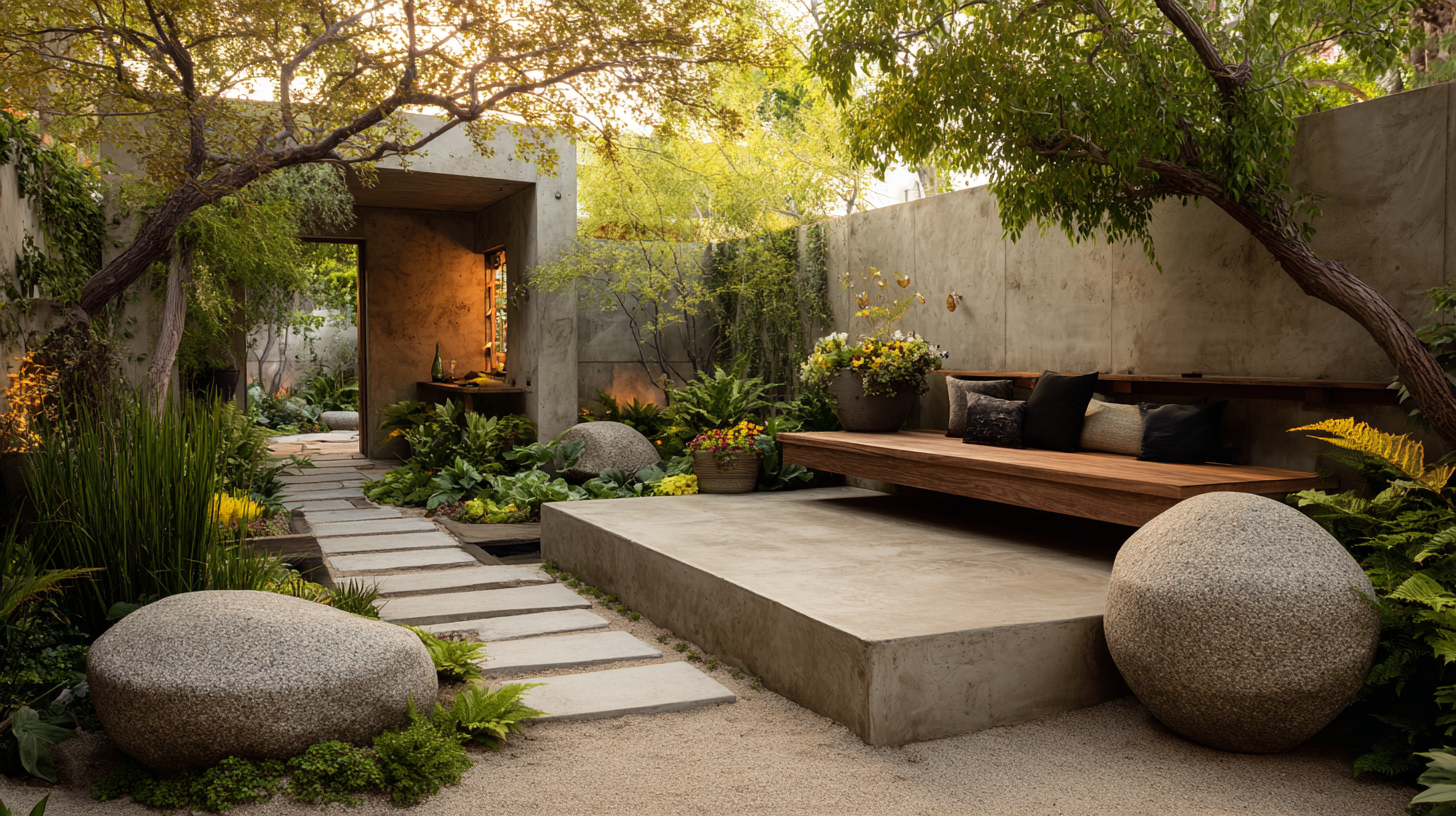
The valuation conversation tends to go the same way. The agent stands at the garden boundary and speaks about aspect, external entertaining space, and kerb appeal. They are measuring what can be measured. They are not measuring — because they cannot — the fourteen years of meals eaten at the same table, or the ease of a summer evening when a space genuinely works, or what it means to a household to have somewhere that holds them reliably through the full range of the year.
This is not a failure of valuation. It is a description of its limits. A well-designed garden does add to a property’s market value. But most of what it adds does not appear on the brochure.
Estate agents can measure the terrace. They cannot quantify the mood when the lights come on at dusk, or what it means to a household to have a space that works.
The daily value of a good garden is felt in what it removes as much as what it provides. The friction designed out: the routes that feel obvious, the shade that arrives when it’s needed, the transition between inside and out that requires no negotiation. Good design removes the small questions that accumulate into reluctance — where do we sit, how do we get there, what do we do in this corner — and replaces them with a space that handles itself.
These things seem minor in isolation. Together they determine whether a garden is genuinely used or merely owned. And a garden that is genuinely used reshapes the habits of the household. The breakfast that moves outside because the morning sun lands on the right table. The hour of quiet that becomes a fixture because the seat is in the right place at the right time of day. These are not small gains. They are changes in how people relate to the place they live.
Unlike most improvements to a property, a garden compounds. Trees establish over years, providing shade, structure, and a presence that no constructed feature can match. Materials take on patina and become more characterful rather than more exhausted. Planting deepens and layers in ways that make the garden more interesting as it matures rather than more familiar.
The habits that form around a well-designed garden deepen in the same way. The spaces that felt new in the first season become necessary in the third. The garden stops being a feature of the house and starts being part of how the household functions — not a separate space maintained alongside it, but one that is genuinely lived in.
The value a well-designed garden delivers is not captured in a square-metre calculation or a comparable sale. It shows up in how people live — in the quality of time spent outside, the ease of the spaces that hold them, the rhythm the garden introduces into the ordinary week. It accumulates over years rather than diminishing. And it is the kind of value that is only fully understood once it has been experienced.
That is what great design gives you. Not a better asset. A better relationship with the place you live.